Amazon is gearing up
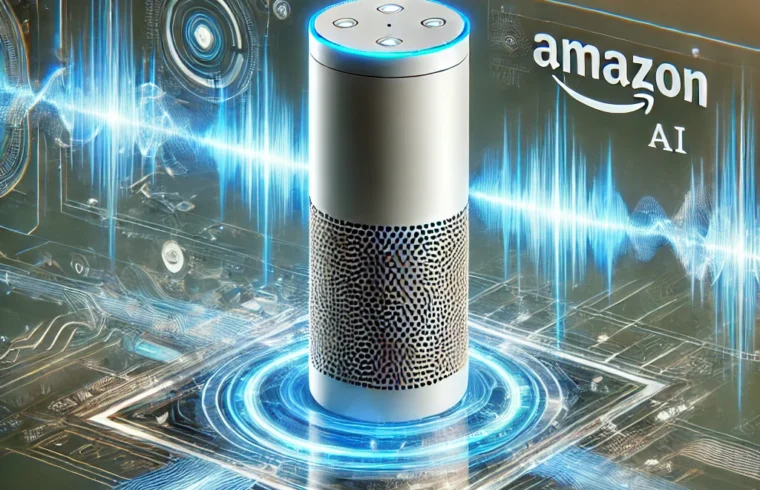
to launch its long-awaited—and long-delayed—Alexa generative artificial intelligence voice service, according to three sources familiar with the matter. A press event is scheduled for February 26 in New York, where Panos Panay, head of Amazon’s devices and services team, is set to preview the upcoming update.
The new generative AI-powered Alexa represents a significant opportunity for Amazon, which currently powers over half a billion Alexa-enabled devices worldwide. Designed to support multi-turn conversations, the revamped Alexa can process sequential prompts and even act as an “agent” on behalf of users—executing actions without direct input. This marks a substantial evolution from the current version that typically handles only one request at a time.
A pivotal “Go/No-go”
meeting is planned for February 14 to finalize whether the new service is ready for public release. However, the update isn’t without challenges. Like similar generative AI chatbots from OpenAI, Alphabet, and others, the new Alexa faces issues such as hallucinations (fabricated responses) and quality control concerns. With Alexa integrated across cars, televisions, thermostats, and mobile phones, it is poised to become an indispensable tool for daily tasks like scheduling, shopping, and more.
In its initial rollout, Amazon plans to offer the service to a limited user base at no cost—although a subscription fee between $5 and $10 per month has been considered for future offerings. Alongside the new release, Amazon will continue to support the current “Classic Alexa,” which will no longer receive new feature updates.
Long envisioned by founder Jeff Bezos, Alexa revolutionized voice assistant technology when it debuted in 2014. With this generative AI upgrade—internally known as “Banyan” or “Remarkable Alexa”—the company aims to fulfill Bezos’ vision of a voice assistant capable of handling a wide array of tasks, from turning on lights and preheating ovens to playing music, writing emails, and even summoning taxis.
In a January Financial Times interview, Amazon executive Rohit Prasad highlighted the hurdles of developing an entirely new AI service, including efforts to eliminate hallucinations. Industry analysts estimate that if just 10% of Alexa’s active users (around 100 million devices) subscribe at $5 per month, the new service could generate up to $600 million in annual revenue.
Customer-centric improvements are also in the works. The new Alexa is designed to remember user preferences, enabling personalized recommendations for music or dining and supporting multi-step commands—such as modifying an order before it’s finalized. The updated service will be compatible with existing Alexa devices and will incorporate AI software from startup Anthropic, in which Amazon has invested $8 billion.
Q1: What is the new Alexa generative AI revamp?
A: It is Amazon’s updated voice service designed to support multi-turn conversations and act as an agent for users, enabling it to execute actions without direct prompts.
Q2: When and where is the press event for the new Alexa scheduled?
A: The event is set for February 26 in New York, where Panos Panay will preview the revamped Alexa.
Q3: How does the new Alexa differ from Classic Alexa?
A: The new service supports sequential prompts and can remember user preferences, while Classic Alexa typically handles one request at a time and will no longer receive new feature updates.
Q4: What challenges does the generative AI service face?
A: Like other generative AI chatbots, it faces challenges such as hallucinations (fabricated responses) and ensuring high quality and speed of responses.
Q5: Will the new Alexa be available for free?
A: Initially, Amazon plans to offer the service to a limited number of users at no cost, though a subscription fee of $5 to $10 per month is being considered for the future.
Q6: How will the new Alexa integrate with existing devices?
A: The updated service will be fully compatible with current Alexa-enabled devices, including those in cars, TVs, thermostats, and mobile phones.